Ayurveda and Alternative Medicine Hospital, Kathmandu Concludes Herbal Medicine Fair
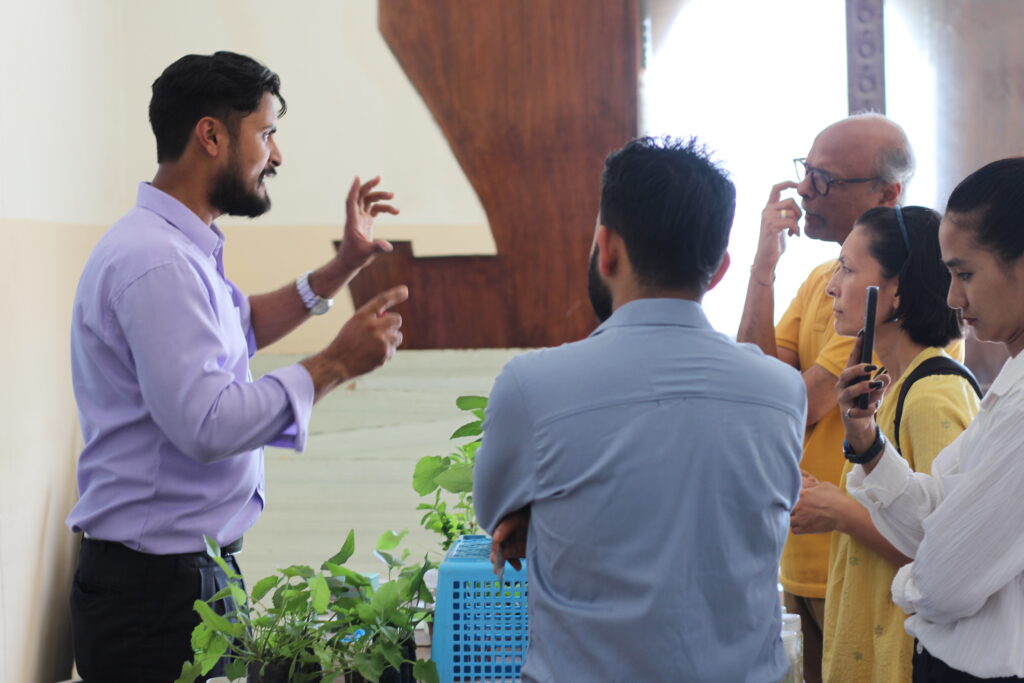
Kathmandu. The ‘Herbal Medicine Fair’ organized by the Ayurveda and Alternative Medicine Hospital, Kathmandu, under the Health Ministry of Bagmati Province Government, concluded on Saturday, June 22 (8th of Asar). The fair, held at the Nepal Academy, aimed to encourage the use of herbal medicines. Along with medicinal herbs, there was also an exhibition of dietary foods, and approximately 1,500 citizens visited the fair.
The fair featured exhibitions by various organizations including the National Herbarium Department under the Department of Plant Resources, Annapurna Research Center, Herbal Processing Centers, indigenous farmers, and international bodies.
Dr. Bikash Devkota, Additional Health Secretary of the Ministry of Health and Population, was the chief guest at the inauguration session. He emphasized the need for Nepal to create strategies for the Ayurvedic sector, including medicinal herbs. He mentioned that the ministry would prioritize the necessity of a separate authority for medicinal herbs in the upcoming year’s policy discussions. He acknowledged that Ayurveda’s expansion had not met expectations and assured that the ministry would provide support and upgrade of the Ayurveda centers. Dr. Devkota stated that the ministry plans to expand both Ayurvedic services and manpower next year.
Dr. Deepak Tiwari, Director General of the Health Directorate of Bagmati Province, expressed that the province is upgrading health centers to hospitals as part of expanding Ayurveda. He said, “To promote health tourism, yoga and Ayurveda are being included in the provincial health policy.”
Senior neurosurgeon Dr. Basant Pant stressed the need to increase coordination with other entities to attract more interest in Ayurveda. He highlighted the necessity of research in Ayurveda in Nepal, similar to India and China, and mentioned that such research would greatly benefit Nepal.
Ghanshyam Gurung, Country Head of the World Wildlife Fund program, spoke about ongoing efforts to conserve and sustainably use indigenous herbs and expressed the desire to work more institutionally. Dr. Narayan Dhakal, Director General of the Department of Drug Administration, emphasized the need to develop and regulate medicines through contemporary research.
Sangita Yadav, Managing Director of Herbal Production and Processing Company Limited, highlighted the need for a Herbal Authority. Pradeep KC, Director General of Ayurveda and Alternative Medicine, emphasized the importance of state investment in Ayurvedic production and services.
Dr. Poonam Nepal, Chief of the Hospital, provided information on the identification and use of herbs, including rare and endangered valuable herbs, local herbs for health promotion and treatment, and related scientific sessions conducted by subject matter experts. She stressed the need to consider the sustainability of these herbs.
Presentations on the policy status, issues, and future of medicinal herbs were given, highlighting how coordinated efforts between agriculture, forestry, drug departments, and herbal sectors could encourage farmers and producers, thereby supporting domestic production and the economy. Speakers emphasized the need for the government to facilitate the establishment of a Herbal Authority.
During the scientific session, Dr. Vijaya Pant presented on the importance and feasibility of tissue culture in Nepal, and Dr. Sangita Raj Bhandari from Tribhuvan University’s Central Department of Botany discussed the correct identification of plants. Dr. Rajendra Gyawali, a professor at Kathmandu University, presented on the impact of climate change on medicinal herbs. Environmental expert Naresh Rimal discussed the importance of medicinal herbs and diet. Public health expert Dr. Aruna Upreti shared her experience in using herbs medicinally and stressed the need to raise public awareness for their proper use. In a panel discussion, Dr. Pushparaj Poudel spoke about the potential of herbs, and Dr. Shyammani Adhikari and Dr. Sarita Shrestha emphasized further development of Ayurveda.
The event included a poster presentation competition and discussions with citizens on the impact of climate change on medicinal herbs.